Designing functional, RNA-targeting small molecules with machines: a case study
Learn more: Generative Chemistry Platform for Small Molecules Targeting RNA: A Case Study for Chemical Optimization
RNA-targeting therapeutics offer incredible opportunities to target previously untargetable genes and exploit previously unexplored mechanisms of action - such as the upregulation of a target protein. While gene therapy is normally used to upregulate expression of genes, for diseases driven by protein insufficiency, we show that it is possible to enhance protein expression using small molecules that target RNA.
Small molecules are orally bioavailable & fundamentally easier to manufacture, providing a clear competitive advantage over delivery than gene therapies. While there is much excitement in this field, our collective industry understanding of the chemistry needed to design approved small-molecule drugs that target RNA is limited. Other than decades-old antibiotics, risdiplam is the only FDA-approved RNA-targeting small-molecule therapy today.
At Serna Bio, we hypothesize that different ideas and designs in chemistry are needed to unlock the potential of RNA as a small-molecule drug target. Generative chemistry AI algorithms provide one source for such ideas. While AI is transforming drug discovery, most public generative chemistry models are trained using protein-targeting-centric data due to the historical precedent set by proteins being the primary source of drug targets.
At Serna Bio, we have used our proprietary dataset of almost 3 million RNA-small molecule interactions to construct our GenAI platform specifically for targeting RNA. Our new generative chemistry platform proves the value of RNA-specific AI by:
- Designing different chemistry compared to state-of-the-art publicly available chemical generators trained on protein-targeting data
- Designing different chemistry compared to a human medicinal chemist
- Designing compounds able to improve compound potency in a Serna Bio RNA-targeting drug discovery campaign
When we have synthesized and experimentally tested compounds designed by our GenAI platform alongside human designs, the GenAI-designed compounds improved compound potency by ~3X in one design-make-test cycle in our GLUT-1 deficiency syndrome drug discovery campaign.
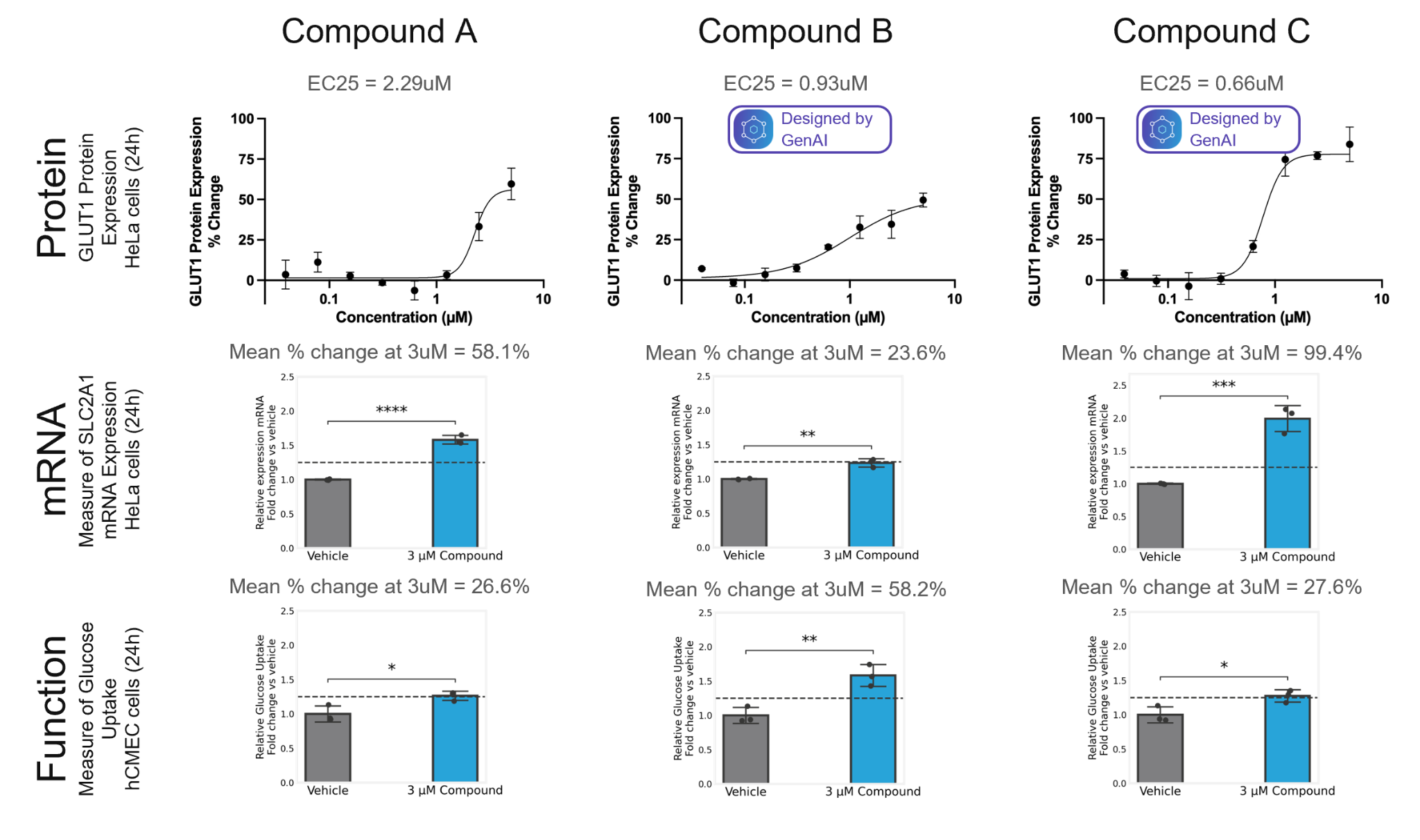
Figure: Compounds designed by the Serna Bio GenAI Platform (Compounds B, C) improve compound potency compared to the initial compound series Hit (Compound A), in an experimentally validated example from the Serna Bio GLUT-1 deficiency syndrome drug discovery campaign.